

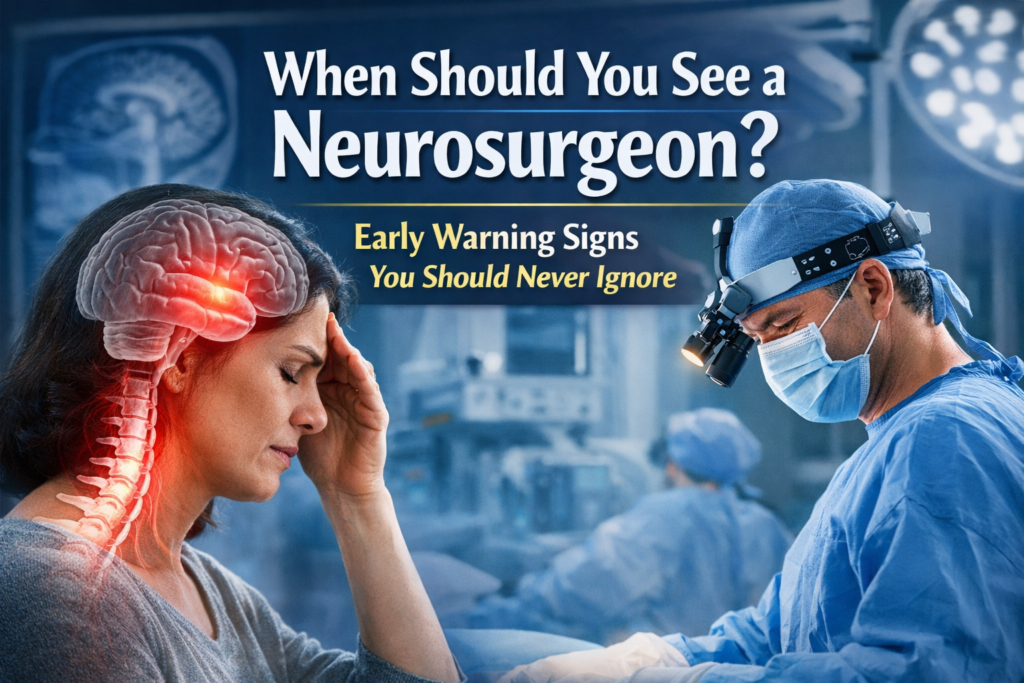
Neurological symptoms can be confusing, frightening, and often easy to ignore at first. Many people assume persistent headaches, back pain, nerve pain, or numbness are simply part of aging or everyday stress. However, in some cases these symptoms may signal a deeper problem involving the brain, spine, or nervous system.
This is where a neurosurgeon plays an important role.
A neurosurgeon is a medical specialist trained to diagnose and treat disorders affecting the brain, spine, spinal cord, and nerves. While many neurological conditions can be treated without surgery, neurosurgeons are experts in determining the best treatment approach, whether surgical or non-surgical.
Understanding when to see a neurosurgeon can help prevent serious complications and ensure timely treatment. Early diagnosis often leads to better outcomes and faster recovery.
In this guide, we will explain:
• What a neurosurgeon does
• Common symptoms that require neurological evaluation
• Conditions treated by neurosurgeons
• When back pain may require spine surgery
• Warning signs you should never ignore
• How neurosurgical consultations work
What Does a Neurosurgeon Do?
A neurosurgeon is a physician who specializes in diagnosing and treating disorders of the nervous system. This includes conditions affecting:
• The brain
• The spinal cord
• The spine
• Peripheral nerves
Despite the name, neurosurgeons do not always perform surgery. In fact, many neurological conditions are treated using conservative methods such as medications, physical therapy, lifestyle changes, or minimally invasive procedures.
Neurosurgeons are highly trained specialists who understand how complex the nervous system is. They use advanced imaging tools such as MRI scans, CT scans, and nerve conduction studies to diagnose neurological disorders.
Their role often involves:
• Identifying the root cause of neurological symptoms
• Recommending non-surgical treatment when possible
• Performing surgery when necessary to relieve pressure on nerves or repair damaged structures
• Monitoring long-term neurological health
Early consultation with a neurosurgeon can help patients receive accurate diagnoses and effective treatment plans.
Why Seeing a Neurosurgeon Early Matters
One of the biggest mistakes patients make is waiting too long before seeking specialized care. Neurological symptoms often worsen gradually, and delaying treatment can lead to permanent nerve damage.
The nervous system controls almost every function in the body. Problems affecting the brain or spinal cord can quickly impact movement, sensation, coordination, and even organ function.
Early evaluation by a neurosurgeon can help:
• Prevent permanent nerve damage
• Identify serious conditions early
• Reduce chronic pain
• Avoid complex surgery through early treatment
• Improve long-term quality of life
Many spine and neurological conditions respond well to treatment when diagnosed early.
10 Warning Signs You Should See a Neurosurgeon
While not every neurological symptom requires surgery, certain warning signs indicate that you should consult a neurosurgeon for evaluation.
1. Persistent or Severe Back Pain
Chronic back pain is one of the most common reasons people visit a neurosurgeon.
Occasional back pain can occur due to muscle strain or posture problems. However, pain that persists for several weeks or becomes progressively worse may indicate a spinal condition.
Possible causes include:
• Herniated disc
• Bulging disc
• Degenerative disc disease
• Spinal stenosis
• Nerve compression
If back pain spreads into the legs or arms, it may indicate nerve involvement.
2. Numbness or Tingling in Arms or Legs
Tingling sensations, often described as pins and needles, can signal nerve compression.
This symptom may occur due to:
• Herniated disc pressing on spinal nerves
• Carpal tunnel syndrome
• Cervical spine disorders
• Sciatica
Persistent numbness or tingling should never be ignored, especially if it spreads or worsens over time.
3. Weakness in Limbs
Muscle weakness in the arms or legs may indicate nerve damage or spinal cord compression.
This symptom can appear as:
• Difficulty lifting objects
• Trouble walking or climbing stairs
• Weak grip strength
• Loss of coordination
Weakness can indicate serious neurological conditions that require urgent evaluation.
4. Severe or Chronic Headaches
Frequent headaches can sometimes be related to neurological conditions.
If headaches are accompanied by symptoms such as:
• blurred vision
• vomiting
• dizziness
• seizures
• confusion
a neurological evaluation may be necessary.
Possible causes include:
• brain tumors
• intracranial pressure disorders
• vascular abnormalities
• neurological diseases
5. Radiating Pain (Sciatica)
Pain that radiates from the lower back into the leg is known as sciatica.
This condition often occurs when a herniated disc presses on the sciatic nerve.
Common symptoms include:
• sharp shooting pain down the leg
• burning sensation in the buttocks or thigh
• numbness in the foot
• difficulty standing or walking
Severe or persistent sciatica often requires evaluation by a spine specialist or neurosurgeon.
6. Loss of Balance or Coordination
Problems with balance may indicate neurological disorders affecting the brain or spinal cord.
Symptoms include:
• difficulty walking in a straight line
• frequent falls
• dizziness
• poor coordination
These symptoms may be associated with:
• brain tumors
• spinal cord disorders
• neurological diseases
Prompt evaluation is essential.
7. Seizures
Seizures occur when abnormal electrical activity affects the brain.
Possible causes include:
• brain tumors
• traumatic brain injury
• neurological disorders
• brain infections
Any unexplained seizure should be evaluated by a neurologist or neurosurgeon immediately.
8. Chronic Neck Pain
Persistent neck pain may be caused by cervical spine conditions.
These conditions include:
• cervical disc herniation
• cervical spinal stenosis
• degenerative spine disease
Symptoms may also include:
• arm pain
• numbness in fingers
• headaches
• muscle weakness
Neurosurgeons specialize in treating cervical spine disorders.
9. Loss of Bladder or Bowel Control
Loss of bladder or bowel control combined with back pain can indicate a rare but serious condition called cauda equina syndrome.
This condition occurs when spinal nerves become severely compressed and requires immediate surgical intervention.
Emergency symptoms include:
• sudden loss of bladder control
• numbness in the groin area
• severe lower back pain
• leg weakness
Immediate medical attention is necessary.
10. Symptoms After a Head or Spine Injury
Trauma to the head or spine can cause neurological damage.
Symptoms may appear immediately or develop later.
Common symptoms include:
• severe headaches
• dizziness
• confusion
• neck pain
• loss of consciousness
• numbness in limbs
A neurosurgeon can evaluate whether structural damage has occurred.
Common Conditions Treated by Neurosurgeons
Neurosurgeons treat a wide range of neurological disorders affecting the brain and spine.
Below is a table of common neurosurgical conditions.
| Condition | Description | Common Symptoms |
|---|---|---|
| Herniated Disc | Disc material presses on spinal nerves | Back pain, leg pain, numbness |
| Brain Tumor | Abnormal growth in the brain | Headaches, seizures, vision changes |
| Spinal Stenosis | Narrowing of spinal canal | Back pain, leg weakness |
| Degenerative Disc Disease | Wear and tear of spinal discs | Chronic back pain |
| Trigeminal Neuralgia | Severe facial nerve pain | Sharp facial pain |
| Hydrocephalus | Fluid buildup in brain | Headache, balance issues |
| Sciatica | Compression of sciatic nerve | Leg pain, numbness |
Many of these conditions can be managed with non-surgical treatments before surgery is considered.
Non-Surgical Treatments Neurosurgeons Recommend
Before recommending surgery, neurosurgeons often explore conservative treatment options.
These may include:
• physical therapy
• medications
• epidural steroid injections
• nerve blocks
• lifestyle changes
• pain management therapies
Many spine conditions improve with these treatments.
Minimally invasive procedures may also be recommended for certain patients.
When Is Neurosurgery Actually Necessary?
Surgery is typically considered only when conservative treatments fail or when a condition threatens neurological function.
Neurosurgery may be necessary if:
• severe nerve compression exists
• spinal cord damage is present
• tumors require removal
• traumatic injury affects the brain or spine
• neurological symptoms worsen rapidly
Modern neurosurgery techniques have significantly improved safety and recovery times.
Minimally invasive spine surgery often allows patients to return to normal activities much faster.
What Happens During a Neurosurgical Consultation?
Many patients feel nervous about seeing a neurosurgeon, but the consultation process is usually straightforward.
A neurosurgical evaluation typically includes:
Medical History Review
Your doctor will review:
• symptoms
• medical history
• previous treatments
• imaging studies
Physical and Neurological Examination
Your neurosurgeon may test:
• reflexes
• muscle strength
• coordination
• sensation
These tests help identify nerve involvement.
Imaging Tests
Imaging tools may include:
• MRI scans
• CT scans
• X-rays
• nerve conduction studies
These tests help locate the source of the problem.
Treatment Plan
Based on the evaluation, the neurosurgeon will recommend:
• non-surgical treatment
• monitoring
• minimally invasive procedures
• surgical intervention if necessary
Patients are encouraged to ask questions and discuss all available treatment options.
How Early Diagnosis Improves Treatment Outcomes
Early diagnosis can dramatically improve treatment outcomes for neurological disorders.
Benefits of early evaluation include:
• faster recovery
• less invasive treatment options
• reduced risk of permanent nerve damage
• improved long-term health outcomes
Ignoring neurological symptoms can lead to complications that may require more complex treatment later.
How to Protect Your Spine and Nervous System
Maintaining good spinal health can reduce the risk of neurological problems.
Helpful habits include:
• maintaining proper posture
• exercising regularly
• lifting objects correctly
• maintaining a healthy weight
• avoiding prolonged sitting
• strengthening core muscles
Regular medical checkups can also help detect neurological issues early.
When Back Pain Requires Immediate Medical Attention
Certain symptoms require urgent medical evaluation.
Seek immediate medical care if you experience:
• sudden weakness in arms or legs
• severe head injury
• loss of consciousness
• sudden vision changes
• difficulty speaking
• loss of bladder or bowel control
These symptoms may indicate neurological emergencies.
Frequently Asked Questions
Do I need a referral to see a neurosurgeon?
Some clinics require referrals from primary care physicians, while others allow direct appointments. Checking with the clinic beforehand can clarify this.
Do neurosurgeons only perform brain surgery?
No. Many neurosurgeons specialize in spine surgery, nerve disorders, and spinal cord conditions.
Is spine surgery always necessary for herniated discs?
Most herniated discs can be treated without surgery using physical therapy and medications.
What is minimally invasive spine surgery?
Minimally invasive spine surgery uses smaller incisions and specialized tools to reduce tissue damage and recovery time.
How long does recovery from neurosurgery take?
Recovery varies depending on the procedure. Some minimally invasive procedures allow recovery within weeks, while complex surgeries may require longer healing periods.
Final Thoughts
Neurological symptoms should never be ignored, especially when they persist or worsen over time. While not every condition requires surgery, consulting a neurosurgeon can help identify the root cause of symptoms and ensure appropriate treatment.
Early diagnosis plays a crucial role in preventing long-term complications and improving recovery outcomes.
If you are experiencing persistent back pain, numbness, headaches, or neurological symptoms, seeking expert evaluation can make a significant difference in your health.
A qualified neurosurgeon can provide the guidance and care needed to protect your brain, spine, and nervous system.
