

Chronic back pain and neck pain affect millions of people every year. For many patients, the discomfort becomes a daily struggle that interferes with work, sleep, exercise, and overall quality of life. Traditional treatments often involve medications, physical therapy, injections, or even invasive spine surgery.
However, many patients are now searching for non-surgical solutions for spine pain, especially when they want to avoid procedures such as spinal fusion or major disc surgery.
One innovative option gaining attention in modern spine care is the Discseel® Procedure.
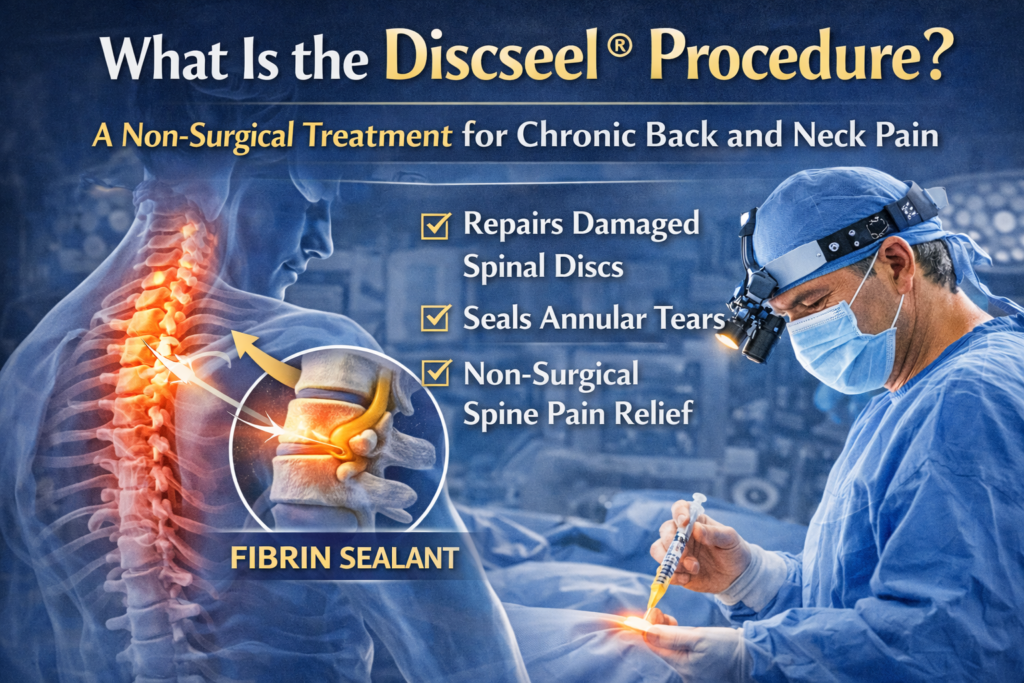
This minimally invasive treatment focuses on repairing damaged spinal discs rather than removing or replacing them. By sealing small tears in the disc using a biologic fibrin sealant, the Discseel procedure aims to relieve pain and help restore the natural function of the spine.
At Morrison Clinic, patients have access to advanced treatments such as the Discseel procedure at locations in Delray Beach, Florida and Manhattan, New York. This innovative approach offers hope to individuals suffering from chronic spine pain who want an alternative to traditional surgery.
In this guide, we will explain everything you need to know about the Discseel procedure, including:
• what the Discseel procedure is
• how spinal disc injuries cause pain
• what annular tears are and why they matter
• how the Discseel procedure works
• conditions it can treat
• who may be a candidate for the procedure
• recovery and expected outcomes
Understanding this treatment option can help patients explore whether a minimally invasive solution may be the right step toward long-term spine health.
Understanding the Role of Spinal Discs
To understand how the Discseel procedure works, it is helpful to first understand how spinal discs function.
The spine is made up of vertebrae, which are the bones that stack on top of one another to form the spinal column. Between each vertebra lies an intervertebral disc.
These discs play a crucial role in the spine by:
• acting as shock absorbers
• allowing flexibility and movement
• preventing bones from rubbing together
• distributing pressure during movement
Each spinal disc consists of two main parts.
Annulus fibrosus
This is the tough outer ring that protects the disc.
Nucleus pulposus
This is the soft, gel-like center that absorbs pressure and movement.
When the outer ring becomes damaged, tiny tears may develop. These tears are called annular tears or disc fissures, and they are one of the most common sources of chronic spine pain.
What Are Annular Tears?
Annular tears occur when small cracks or fissures form in the outer layer of the spinal disc.
These tears allow the inner gel material of the disc to leak outward, which can irritate surrounding nerves and tissues.
Annular tears are often the underlying cause of many common spine problems, including:
• herniated discs
• bulging discs
• degenerative disc disease
• chronic lower back pain
• neck pain
• radiculopathy (nerve pain that travels down the arms or legs)
Many patients with persistent spine pain may actually have annular tears that are difficult to detect on standard imaging scans.
Because these tears allow the disc to leak inflammatory substances, they can cause severe pain even when the disc appears relatively normal on imaging studies.
Why Traditional Spine Treatments Sometimes Fail
Traditional treatments for back pain often focus on reducing inflammation or removing damaged tissue.
Common treatments include:
• physical therapy
• steroid injections
• pain medications
• spinal fusion surgery
• disc removal procedures
While these treatments can help some patients, they do not always address the root cause of the problem.
If annular tears remain untreated, the disc may continue to leak inflammatory substances and cause persistent pain.
This is where the Discseel procedure offers a unique advantage. Instead of removing the disc, it focuses on repairing the disc itself.
What Is the Discseel® Procedure?
The Discseel® Procedure is a minimally invasive spine treatment designed to repair damaged spinal discs by sealing annular tears.
This procedure uses a biologic fibrin sealant, which is a substance naturally found in human blood that helps form clots and promote tissue healing.
During the procedure, the fibrin sealant is injected directly into the damaged disc. The sealant fills small tears in the disc and helps close them.
Once sealed, the disc can begin to stabilize and potentially regenerate healthy tissue.
The goal of the Discseel procedure is to:
• seal torn spinal discs
• stop inflammatory leakage
• reduce nerve irritation
• promote natural healing of disc tissue
• relieve chronic back and neck pain
Because the procedure targets the underlying cause of disc pain, many patients experience significant improvement without requiring major surgery.
Conditions the Discseel Procedure Can Treat
The Discseel procedure is designed to treat several common spinal conditions that originate from annular tears.
These include:
| Condition | Description |
|---|---|
| Herniated Disc | Disc material presses on spinal nerves |
| Bulging Disc | Disc protrudes beyond normal boundary |
| Degenerative Disc Disease | Age-related disc deterioration |
| Chronic Back Pain | Persistent pain from disc damage |
| Radiculopathy | Nerve pain radiating into arms or legs |
| Spinal Disc Fissures | Small tears in the annulus fibrosus |
Even conditions such as spinal stenosis and facet hypertrophy may trace their origins to annular tears.
By sealing the damaged disc, the Discseel procedure aims to treat the underlying structural problem rather than simply masking symptoms.
How the Discseel Procedure Is Performed
The Discseel procedure is performed using specialized imaging technology that allows physicians to precisely locate damaged discs.
Below is a general overview of how the procedure works.
1. Diagnostic Imaging
Before the procedure, doctors use imaging tools such as MRI scans and fluoroscopic guidance to identify the damaged disc.
A special diagnostic technique called an annulogram may be used.
An annulogram helps visualize disc tears by injecting contrast material into the disc and observing how it spreads.
If the contrast material leaks through the disc, it indicates a tear.
2. Fluoroscopic Guidance
Fluoroscopy is a type of real-time X-ray imaging that helps physicians guide the needle to the exact location of the damaged disc.
This ensures accuracy and safety during the procedure.
3. Injection of Fibrin Sealant
Once the tear is identified, the physician injects the fibrin sealant into the disc.
The fibrin works by:
• sealing the disc tear
• stabilizing the disc structure
• encouraging tissue healing
Over time, the fibrin becomes integrated with the disc tissue.
4. Recovery and Healing
After the procedure, the body begins the healing process.
The sealed disc is able to recover without leaking inflammatory substances that irritate nearby nerves.
Many patients begin experiencing gradual pain relief as the disc heals.
Advantages of the Discseel Procedure
The Discseel procedure offers several potential advantages compared with traditional spine surgery.
Some of the benefits include:
• minimally invasive technique
• no removal of spinal discs
• preservation of natural spinal movement
• faster recovery time
• reduced risk compared to major surgery
• treatment of the root cause of disc pain
Because the procedure repairs the disc rather than removing it, many patients appreciate the ability to maintain the natural biomechanics of their spine.
Who May Be a Candidate for the Discseel Procedure?
Not every patient with back pain is a candidate for the Discseel procedure.
However, it may be an option for patients experiencing:
• chronic lower back pain
• neck pain caused by disc damage
• herniated discs
• bulging discs
• degenerative disc disease
• nerve pain caused by disc injuries
Patients who have not found relief from traditional treatments may benefit from exploring this option.
A comprehensive medical evaluation is necessary to determine whether the procedure is appropriate.
Recovery After the Discseel Procedure
Recovery from the Discseel procedure is typically much faster than traditional spine surgery.
Because the procedure is minimally invasive, most patients can return home the same day.
Recovery may include:
• limited physical activity for a short period
• gradual return to daily activities
• follow-up evaluations with the physician
Many patients begin noticing improvements in pain levels as the disc heals over time.
However, healing responses can vary depending on the individual and the severity of the disc damage.
The Importance of Expert Spine Evaluation
Back pain can have many different causes. While some patients may benefit from advanced procedures like Discseel, others may respond well to conservative treatments.
An experienced neurosurgeon or spine specialist can evaluate symptoms and imaging studies to determine the most appropriate treatment plan.
At Morrison Clinic, the goal is to identify the root cause of spine pain and provide patients with personalized treatment options that prioritize safety, effectiveness, and long-term spine health.
Preventing Future Disc Damage
Protecting spinal health is essential for preventing future disc injuries.
Helpful habits include:
• maintaining proper posture
• strengthening core muscles
• practicing safe lifting techniques
• maintaining a healthy body weight
• staying physically active
These lifestyle habits help reduce pressure on the spine and support long-term mobility.
Frequently Asked Questions About the Discseel Procedure
Is the Discseel procedure a type of surgery?
The Discseel procedure is considered minimally invasive and does not involve traditional open spine surgery.
Is fibrin sealant safe?
Fibrin sealant is a biologic substance used in many medical procedures to promote tissue healing and clot formation.
How long does the Discseel procedure take?
The procedure typically takes less time than traditional spine surgery and is performed using image guidance.
How soon can patients return to normal activities?
Recovery times vary, but many patients can gradually resume normal activities much sooner than after major spine surgery.
Final Thoughts
Chronic back pain and neck pain can significantly affect daily life, making it difficult to work, exercise, or enjoy normal activities.
While traditional spine surgery remains necessary in some cases, advancements in medical technology have created new options for treating disc-related pain.
The Discseel® Procedure represents a minimally invasive approach that focuses on repairing damaged spinal discs and addressing the underlying cause of pain.
By sealing annular tears and promoting disc healing, this innovative treatment offers an alternative path for patients seeking relief from chronic spine conditions.
Patients interested in learning more about the Discseel procedure can consult with spine specialists to determine whether this treatment may be an appropriate option for their condition.
Early diagnosis and expert care remain essential for protecting spinal health and improving long-term outcomes.
