

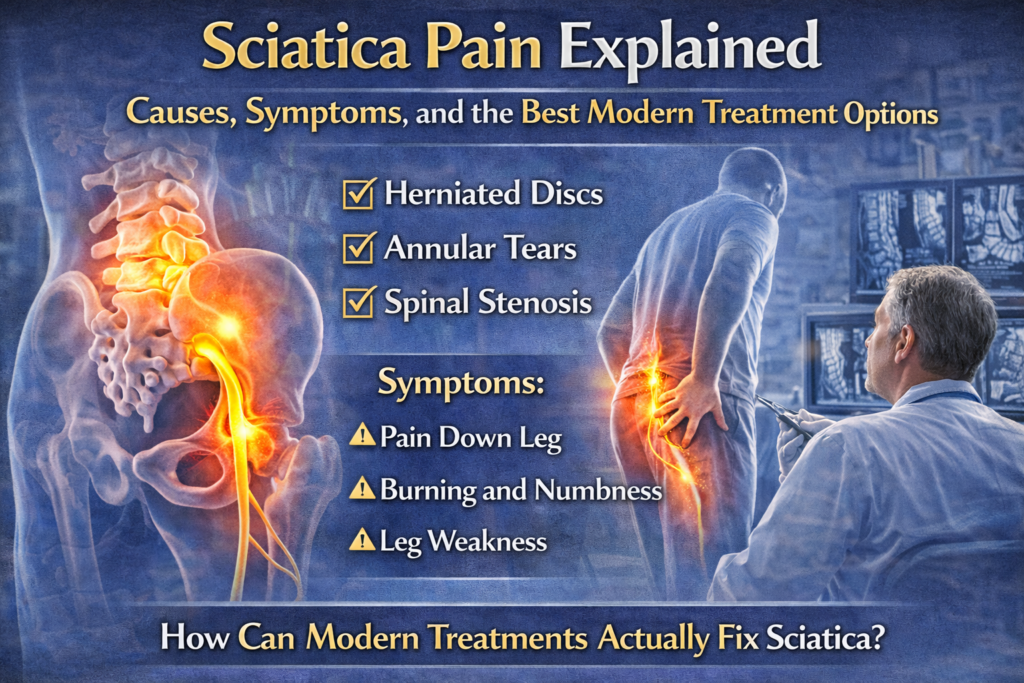
Sciatica is one of the most common — and most painful — nerve conditions affecting millions of people every year. If you’ve ever experienced a sharp, shooting pain that travels from your lower back down your leg, you know how disruptive and debilitating it can be.
For many patients, sciatica is not just discomfort — it’s a condition that affects:
• walking
• sitting
• sleeping
• working
• daily movement
And the biggest question most people have is:
👉 “How do I get rid of sciatica pain for good?”
The answer is not always simple — because sciatica is not a condition itself. It is a symptom of an underlying spine problem.
In this comprehensive guide, we’ll break down:
• what sciatica really is
• what causes it
• the most common symptoms
• why it keeps coming back
• the most effective treatment options
• when to seek advanced care
Understanding the root cause of sciatica is the key to long-term relief.
What Is Sciatica?
Sciatica refers to pain that travels along the sciatic nerve, the largest nerve in the human body.
The sciatic nerve:
• starts in the lower back
• travels through the hips and buttocks
• runs down each leg
When this nerve becomes irritated or compressed, it causes:
👉 radiating nerve pain
Common Symptoms of Sciatica
Sciatica symptoms can vary in intensity but often include:
• sharp, shooting pain down one leg
• burning sensation in the leg or foot
• numbness or tingling
• weakness in the leg
• pain that worsens when sitting
👉 Most cases affect one side of the body
What Causes Sciatica?
Sciatica is caused by compression or irritation of the sciatic nerve.
Here are the most common causes:
1. Herniated Disc (Most Common Cause)
A herniated disc presses on the nerve.
This is responsible for:
👉 majority of sciatica cases
2. Bulging Disc
A disc protrudes outward and touches the nerve.
Less severe than herniation, but still painful.
3. Annular Tears (Hidden Cause)
Small tears in the disc can:
• leak inflammatory chemicals
• irritate the nerve
👉 even without major herniation
4. Spinal Stenosis
Narrowing of the spinal canal puts pressure on nerves.
5. Piriformis Syndrome
A muscle in the buttock compresses the sciatic nerve.
6. Degenerative Disc Disease
Disc breakdown leads to instability and nerve irritation.
Why Sciatica Pain Can Be So Severe
Sciatic nerve pain is different from muscle pain.
It is:
• sharper
• more intense
• radiating
• harder to ignore
This is because:
👉 nerves amplify pain signals
Why Sciatica Keeps Coming Back
Many patients experience recurring sciatica.
This happens because:
❌ the root cause is not treated
❌ only inflammation is reduced
Temporary treatments may help, but:
👉 the disc problem remains
What Makes Sciatica Worse
Sciatica pain often worsens with:
• prolonged sitting
• bending forward
• lifting heavy objects
• sudden movements
• poor posture
Non-Surgical Treatments for Sciatica
Most cases improve without surgery.
1. Physical Therapy
Focuses on:
• strengthening muscles
• improving posture
• reducing pressure on nerve
2. Medications
Includes:
• anti-inflammatory drugs
• muscle relaxants
Provides short-term relief.
3. Epidural Steroid Injections
Reduces nerve inflammation.
Often used for:
• severe pain
• acute flare-ups
4. Lifestyle Adjustments
Simple but effective:
• avoid long sitting
• improve posture
• stay active
What These Treatments Don’t Do
Most treatments:
❌ do not fix disc damage
❌ do not seal annular tears
❌ do not stop recurrence
The Real Problem: Disc-Driven Nerve Irritation
Sciatica is usually a symptom of:
👉 disc damage
Especially:
• herniation
• bulging
• annular tears
These conditions:
• irritate nerves
• cause inflammation
• trigger pain signals
Modern Treatment Approach (2026 and Beyond)
Spine care is evolving toward:
👉 treating the source, not just symptoms
Focus areas:
• repairing disc damage
• reducing inflammation at origin
• preserving spine function
When Sciatica Becomes Serious
You should seek immediate care if you experience:
• severe leg weakness
• loss of bladder or bowel control
• worsening neurological symptoms
These may indicate:
👉 nerve damage emergency
When to See a Specialist
You should consider evaluation if:
• pain lasts more than 6 weeks
• symptoms keep returning
• treatments aren’t working
• pain affects daily life
Recovery Timeline for Sciatica
| Severity | Recovery Time |
| Mild | weeks |
| Moderate | 1–3 months |
| Severe | requires intervention |
Preventing Sciatica
Focus on:
• core strength
• posture
• movement
• flexibility
• weight management
Frequently Asked Questions
Can sciatica go away on its own?
Yes, many cases improve over time.
How long does sciatica last?
Typically a few weeks to months.
Is walking good for sciatica?
Yes — movement helps reduce pressure.
Can sciatica become permanent?
If untreated, nerve damage can occur.
Final Thoughts
Sciatica is one of the most common — yet misunderstood — nerve conditions.
While many treatments focus on temporary relief, long-term success depends on identifying and treating the root cause.
In most cases, that root cause lies within the spinal disc.
Understanding this is the key to breaking the cycle of recurring pain.
If your sciatica keeps coming back or isn’t improving, it may be time to explore more advanced treatment options that address the underlying issue — not just the symptoms.
