
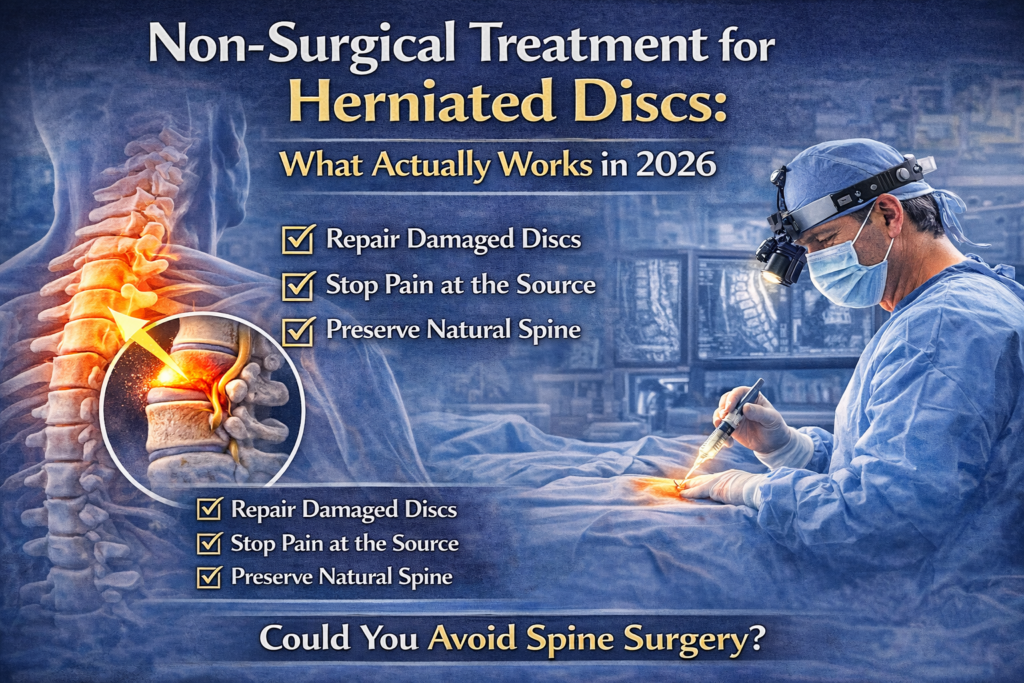
A herniated disc is one of the most common causes of back pain, neck pain, and nerve-related symptoms like sciatica. For many patients, the diagnosis comes with immediate concern — and one big question:
👉 “Do I need surgery?”
The good news is this:
👉 Most herniated discs do NOT require surgery.
In fact, advances in spine care have made it possible to treat many disc-related conditions using non-surgical and minimally invasive approaches.
However, not all treatments are equally effective — and many patients end up cycling through temporary solutions without ever addressing the real cause of their pain.
In this guide, we’ll break down:
• what a herniated disc really is
• why it causes pain
• the most effective non-surgical treatments
• what actually works (and what doesn’t)
• when surgery may still be necessary
• how modern treatments are changing spine care
If you are dealing with persistent back pain, nerve pain, or sciatica, this guide will help you understand your options.
What Is a Herniated Disc?
The spine is made up of vertebrae separated by soft discs that act as cushions.
Each disc has two main parts:
• Annulus fibrosus – the outer protective layer
• Nucleus pulposus – the soft inner core
A herniated disc occurs when:
👉 the outer layer tears
👉 the inner material pushes outward
This can press on nearby nerves, causing pain and other symptoms.
Common Symptoms of a Herniated Disc
Symptoms vary depending on the location of the disc.
Lumbar (Lower Back) Herniation
• lower back pain
• sciatica (pain down the leg)
• numbness in the foot or leg
• weakness
Cervical (Neck) Herniation
• neck pain
• shoulder pain
• arm numbness
• tingling in fingers
👉 The key symptom:
Radiating nerve pain
Why Herniated Discs Cause Pain
Pain from a herniated disc comes from two main sources:
1. Nerve Compression
The disc presses on nearby nerves, causing:
• sharp pain
• tingling
• numbness
2. Inflammation
The disc releases inflammatory chemicals that irritate nerves.
👉 This is often the bigger issue.
Even small herniations can cause severe pain due to inflammation.
The Truth: Most Herniated Discs Heal Without Surgery
Research shows:
👉 80–90% of herniated discs improve without surgery
But here’s the problem:
Many patients never get the right type of treatment.
Non-Surgical Treatments That Actually Work
Let’s break down what works — and what doesn’t.
1. Physical Therapy (Foundation Treatment)
Physical therapy is usually the first step.
What it does:
• strengthens core muscles
• improves posture
• reduces pressure on discs
What it doesn’t do:
❌ repair disc tears
❌ stop internal leakage
👉 Best for: mild to moderate cases
2. Anti-Inflammatory Medications
These include:
• NSAIDs
• muscle relaxants
Benefits:
• reduce inflammation
• relieve pain
Limitations:
❌ temporary relief only
❌ no structural healing
3. Epidural Steroid Injections
One of the most common treatments.
How it works:
• steroid injected near nerve
• reduces inflammation
Benefits:
• fast pain relief
• helps with sciatica
Limitations:
❌ does not fix disc
❌ relief may wear off
4. Activity Modification
Simple but powerful.
Includes:
• avoiding heavy lifting
• improving posture
• reducing sitting time
5. Chiropractic Care
Some patients benefit from:
• spinal adjustments
• mobility improvements
⚠️ Not suitable for all cases
What Most Treatments Miss
Here’s the key issue:
👉 Most treatments do NOT fix the disc itself.
They manage:
• inflammation
• muscle tension
• nerve irritation
But the underlying problem — often annular tears — remains.
The Real Problem: Disc Damage
A herniated disc is not just a “bulge.”
It often starts with:
👉 annular tears
These tears:
• allow disc material to leak
• trigger inflammation
• irritate nerves
Unless these tears are addressed:
👉 pain can return
The Future of Non-Surgical Spine Treatment
Modern spine care is shifting toward:
👉 repairing discs instead of removing them
Instead of:
❌ cutting out the disc
❌ fusing the spine
New approaches focus on:
✅ sealing disc damage
✅ restoring function
✅ reducing inflammation at the source
Minimally Invasive Treatment Options
Newer treatments aim to:
• preserve the disc
• reduce recovery time
• avoid major surgery
These procedures are:
• image-guided
• precise
• less invasive
When Non-Surgical Treatment Works Best
You are a good candidate if:
• pain is moderate
• no severe nerve damage
• symptoms are recent
• mobility is still intact
When Surgery May Be Necessary
Even though most cases don’t need surgery, some do.
Surgery may be required if:
• severe weakness develops
• loss of bladder control
• extreme nerve compression
• pain is unbearable and persistent
Common Surgical Options
| Procedure | Purpose |
| Microdiscectomy | Remove disc portion |
| Laminectomy | relieve pressure |
| Fusion | stabilize spine |
Recovery Comparison
| Treatment | Recovery Time |
| Physical Therapy | weeks |
| Injections | days–weeks |
| Minimally Invasive | weeks |
| Surgery | months |
Why Patients Seek Alternatives to Surgery
Many patients want to avoid surgery because of:
• long recovery time
• risks
• reduced flexibility
• repeat procedures
Preventing Future Disc Problems
Key habits:
• strengthen core
• avoid prolonged sitting
• maintain posture
• stay active
• lift properly
Frequently Asked Questions
Can a herniated disc fully heal?
Yes, many improve naturally or with treatment.
How long does recovery take?
Typically:
• mild cases: weeks
• moderate: months
Is surgery permanent?
Not always — recurrence can happen.
What is the best treatment?
Depends on severity and root cause.
Final Thoughts
A herniated disc can feel overwhelming — but it does not automatically mean surgery.
The key is understanding:
👉 what’s causing your pain
👉 what treatments actually fix it
Most importantly:
👉 treating the source, not just symptoms
With modern advancements in spine care, patients now have more options than ever to find relief without undergoing major surgery.
If your pain hasn’t improved, it may be time to explore solutions that go deeper than traditional treatments.
