
A brain tumor diagnosis can feel overwhelming—for patients and families alike. Questions about prognosis, treatment paths, and quality of life often arise immediately. Fortunately, advances in medicine and technology have significantly expanded brain tumor treatment options, offering more precise, effective, and personalized care than ever before.
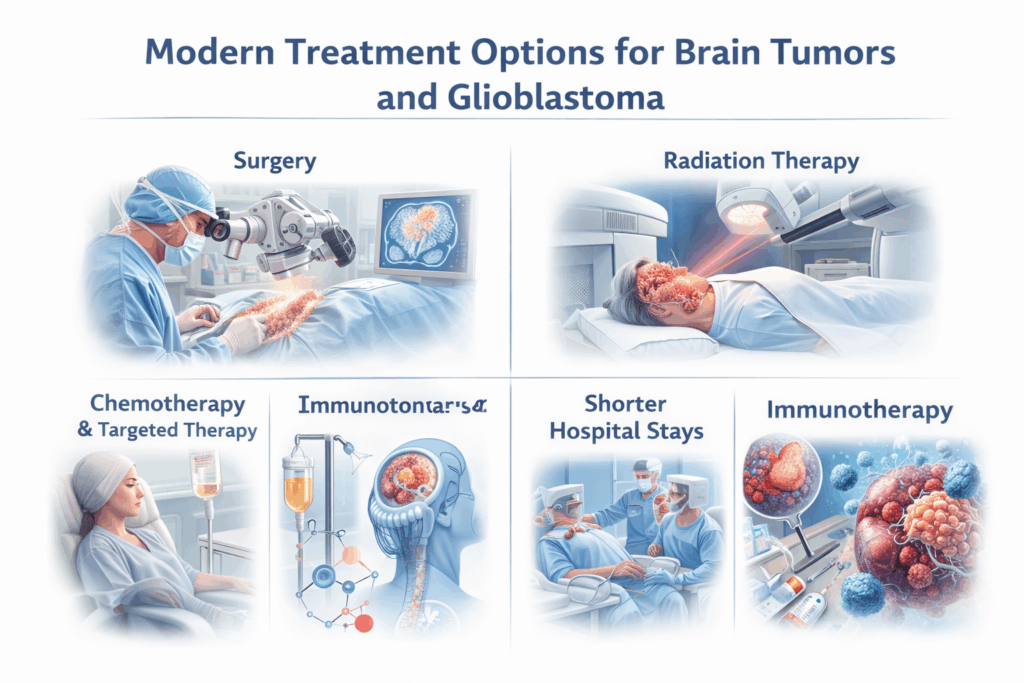
From cutting-edge surgical techniques to targeted therapies and immunotherapy, modern treatment approaches are improving outcomes and helping patients maintain function and independence throughout care. This article explores today’s most effective brain tumor treatment options, with special focus on glioblastoma—one of the most aggressive forms of brain cancer.
Understanding Brain Tumors
Brain tumors develop when abnormal cells grow uncontrollably within the brain or surrounding tissues. They can be classified as:
- Primary brain tumors – originate in the brain
- Secondary (metastatic) tumors – spread to the brain from cancer elsewhere in the body
Tumors are also categorized as benign (noncancerous) or malignant (cancerous). Glioblastoma, also known as glioblastoma multiforme (GBM), is a malignant primary brain tumor known for its rapid growth and complex treatment needs.
What Is Glioblastoma?
Glioblastoma is the most common and aggressive malignant brain tumor in adults. It arises from glial cells and tends to infiltrate surrounding brain tissue, making complete surgical removal challenging.
Key characteristics include:
- Rapid growth
- Irregular tumor boundaries
- Resistance to conventional therapies
Because of these factors, glioblastoma treatment typically requires a multimodal approach, combining surgery, radiation, and systemic therapies.
Personalized Treatment Planning
No two brain tumors are the same. Effective care begins with a comprehensive evaluation that may include:
- MRI and CT imaging
- Functional brain mapping
- Molecular and genetic tumor profiling
- Neurological and cognitive assessments
These insights allow specialists to tailor brain tumor treatment options to the patient’s specific tumor type, location, and overall health—maximizing effectiveness while preserving neurological function.
Surgical Treatment Options
1. Tumor Resection (Craniotomy)
Surgery is often the first and most critical step in treating brain tumors. The primary goal is maximal safe resection—removing as much tumor tissue as possible without damaging essential brain structures.
Modern surgical advancements include:
- High-powered surgical microscopes
- Neuronavigation systems (GPS for the brain)
- Intraoperative MRI and ultrasound
For glioblastoma, even partial tumor removal can reduce pressure, relieve symptoms, and improve the effectiveness of additional therapies.
2. Awake Brain Surgery
In certain cases, surgeons perform procedures while the patient is awake and responsive. This allows real-time monitoring of speech, movement, and cognition, helping protect vital brain functions.
Awake surgery is particularly valuable when tumors are located near:
- Language centers
- Motor control regions
- Sensory processing areas
3. Minimally Invasive Neurosurgery
Minimally invasive techniques use smaller incisions and targeted access pathways, reducing trauma to healthy brain tissue. Benefits include:
- Less post-operative pain
- Shorter hospital stays
- Faster neurological recovery
For eligible patients, this approach represents a significant advancement in brain tumor treatment options.
Radiation Therapy Advances
Radiation therapy plays a central role in managing both benign and malignant brain tumors, especially glioblastoma.
4. External Beam Radiation Therapy (EBRT)
Traditional radiation therapy uses high-energy beams to destroy tumor cells or prevent further growth. Treatments are carefully planned to minimize exposure to healthy brain tissue.
5. Stereotactic Radiosurgery (SRS)
Despite the name, this is a non-surgical treatment that delivers highly focused radiation in one or a few sessions. Technologies such as Gamma Knife and CyberKnife allow precise targeting of tumors with minimal impact on surrounding tissue.
SRS is commonly used for:
- Small or hard-to-reach tumors
- Residual tumor tissue after surgery
- Recurrent brain tumors
6. Proton Beam Therapy
Proton therapy offers a more targeted form of radiation that stops at the tumor site rather than passing through the body. This precision is especially beneficial for tumors near critical structures or in younger patients where long-term side effects are a concern.
Systemic and Targeted Therapies
7. Chemotherapy
Chemotherapy uses drugs to kill rapidly dividing cancer cells. In glioblastoma treatment, chemotherapy is often administered alongside radiation therapy to improve effectiveness.
Temozolomide is a commonly used chemotherapy drug that can cross the blood-brain barrier—a crucial factor in brain tumor treatment options.
8. Targeted Therapy
Targeted therapies focus on specific genetic mutations or molecular pathways within tumor cells. By attacking cancer cells more precisely, these treatments may reduce damage to healthy tissue and limit side effects.
Genetic testing of tumor samples helps determine whether targeted therapy is an appropriate option.
9. Immunotherapy
Immunotherapy aims to harness the body’s immune system to recognize and attack tumor cells. While still evolving in brain cancer treatment, approaches such as:
- Immune checkpoint inhibitors
- Cancer vaccines
- CAR T-cell therapy (in clinical trials)
are showing promise for select patients with glioblastoma and other brain tumors.
Tumor Treating Fields (TTF)
Tumor Treating Fields therapy uses low-intensity electrical fields delivered through wearable devices to disrupt cancer cell division. This FDA-approved treatment has been shown to extend survival in some glioblastoma patients when combined with standard therapy.
TTF represents a non-invasive addition to modern brain tumor treatment options.
Supportive and Rehabilitative Care
Effective brain tumor care extends beyond tumor removal or control. Supportive therapies play a vital role in recovery and quality of life, including:
- Physical and occupational therapy
- Speech and cognitive rehabilitation
- Pain and symptom management
- Psychological and emotional support
A comprehensive care team ensures patients are supported at every stage of treatment and recovery.
Clinical Trials and Emerging Treatments
Clinical trials offer access to innovative therapies that are not yet widely available. For patients with aggressive or recurrent tumors, participation in clinical research may provide additional options and hope.
Ongoing research continues to refine surgical techniques, improve drug delivery across the blood-brain barrier, and develop personalized therapies based on tumor genetics.
Why a Specialized Neurosurgical Team Matters
The complexity of brain tumors—especially glioblastoma—requires expert coordination across multiple disciplines. Outcomes are closely tied to:
- Surgical expertise
- Advanced technology
- Experience with complex tumor cases
- Individualized care planning
Choosing the right neurosurgical team can significantly influence both survival and quality of life.
Choose Morrison Clinic for Expert Neurosurgical Care
When facing a brain tumor diagnosis, expertise, precision, and compassion matter. Morrison Clinic provides comprehensive, advanced brain tumor treatment options guided by leading neurosurgical experience and state-of-the-art technology.
Patients at Morrison Clinic benefit from:
- Personalized treatment strategies
- Advanced surgical and non-surgical options
- Focus on preserving neurological function
- Continuity of care from diagnosis through recovery
If you or a loved one is exploring modern brain tumor treatment options, including care for glioblastoma, choose a clinic committed to innovation, precision, and patient-centered outcomes. Choose Morrison Clinic for expert neurosurgical care you can trust.
