

Sudden back pain does not always come from a pulled muscle, herniated disc, or pinched nerve. In older adults and people with weakened bones, severe or persistent back pain can sometimes be caused by a vertebral compression fracture.
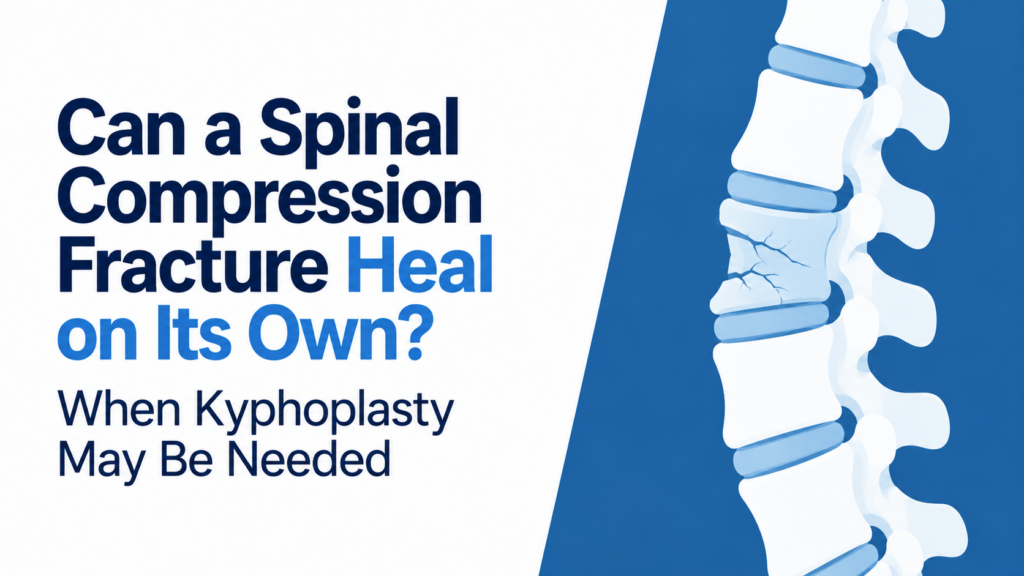
A spinal compression fracture occurs when one of the vertebrae that make up the spinal column weakens and collapses or compresses. Osteoporosis is one of the most common reasons this happens, although spinal fractures may also be associated with trauma, certain tumors, and other conditions that weaken bone.
After receiving this diagnosis, patients often have the same question: Can a spinal compression fracture heal on its own?
Some vertebral compression fractures can improve with conservative treatment and time. Others continue to cause significant pain, limit mobility, or progressively collapse. For appropriately selected patients with persistent fracture related pain, a minimally invasive procedure called kyphoplasty may be considered.
Morrison Clinic provides kyphoplasty and other advanced spine treatments based on each patient’s symptoms, imaging, medical history, and underlying cause of pain.
Understanding when a compression fracture may heal without surgery and when additional treatment may be necessary can help patients make more informed decisions about their spine care.
What Is a Spinal Compression Fracture?
The spine is made up of individual bones called vertebrae. These bones provide structural support while protecting the spinal cord and nerves.
A vertebral compression fracture occurs when a vertebral body loses enough strength that it begins to collapse.
Unlike a fracture of an arm or leg, a compression fracture does not necessarily mean that the vertebra has broken into separate pieces. Instead, part of the vertebral body may become compressed, changing its normal shape and reducing its height.
The front portion of the vertebra may collapse more than the back, sometimes creating a wedge shaped appearance.
A single fracture may cause significant pain. Multiple compression fractures can also affect spinal alignment and posture.
What Causes Vertebral Compression Fractures?
Osteoporosis is one of the leading causes.
Healthy bone is constantly being broken down and rebuilt. Osteoporosis develops when bone becomes less dense and structurally weaker, making fractures more likely.
When osteoporosis becomes advanced, a vertebra may fracture after relatively minor stress.
A fall can cause a compression fracture, but fractures can sometimes occur during everyday movements such as bending, twisting, lifting, or even coughing forcefully in patients with severely weakened bones.
Not every compression fracture is caused by osteoporosis.
Traumatic injuries can fracture otherwise healthy vertebrae. Certain cancers and other diseases can weaken spinal bones and produce what is sometimes called a pathologic vertebral compression fracture.
Determining why the fracture occurred is therefore an important part of treatment.
What Does a Spinal Compression Fracture Feel Like?
Symptoms vary.
Some compression fractures are discovered incidentally on imaging and produce relatively few symptoms.
Others cause sudden and significant back pain.
Pain may be localized around the fractured vertebra and can worsen when standing, walking, bending, or changing position.
Patients may notice that lying down provides some relief because it reduces the load placed on the spine.
Other possible signs include reduced mobility, difficulty performing normal daily activities, loss of height, or changes in posture.
When several vertebrae become compressed over time, the spine may develop an increasingly forward curved posture.
Because these symptoms can overlap with many other spinal conditions, pain alone cannot confirm a compression fracture.
Can a Spinal Compression Fracture Heal Without Surgery?
Yes, some compression fractures can improve without a surgical procedure.
The body has a natural healing process, and many stable vertebral compression fractures may be managed initially with conservative care.
Treatment can include activity modification, appropriate pain management, physical rehabilitation when appropriate, and treatment of underlying osteoporosis or other bone health problems.
In certain situations, a physician may recommend a brace to help support the spine during recovery.
The appropriate treatment depends on the type of fracture, severity of pain, spinal stability, overall health, and cause of the fracture.
For some patients, symptoms gradually improve as the fracture heals.
For others, pain remains severe enough to significantly affect walking, sleeping, independence, or quality of life.
How Long Does a Compression Fracture Take to Heal?
There is no exact recovery timeline that applies to every patient.
Bone healing generally occurs over a period of weeks to months, but symptom improvement varies according to the patient’s age, bone quality, health, fracture severity, and other factors.
A patient’s pain may improve before the bone has fully healed.
Conversely, some patients continue to experience substantial pain even after a period of conservative treatment.
This is why ongoing symptoms should be reassessed rather than simply assuming that persistent pain is normal.
Follow up imaging may sometimes be needed to evaluate the fracture and determine whether additional treatment should be considered.
How Do Doctors Diagnose a Vertebral Compression Fracture?
Diagnosis generally begins with a medical history and physical examination.
Your physician will want to understand when the pain began, whether there was a fall or injury, where the pain is located, what makes it worse, and whether you have known osteoporosis, cancer, or other medical conditions.
Imaging is particularly important.
X-rays may identify loss of vertebral height or changes in the shape of the vertebra.
MRI can provide additional information about the fracture and surrounding tissues and can sometimes help distinguish a more recent fracture from an older one.
CT scans may provide detailed information about the bony anatomy.
In selected cases, additional imaging such as bone scintigraphy may be used.
The purpose is not simply to find an abnormal vertebra. The physician must determine whether the fracture seen on imaging is actually responsible for the patient’s current pain.
When Is a Spinal Compression Fracture Serious?
Any suspected spinal fracture deserves appropriate medical evaluation.
Certain symptoms require particularly prompt attention.
Severe pain following significant trauma should be evaluated.
New weakness, numbness, difficulty walking, loss of bowel or bladder control, or other neurological changes may indicate involvement of the spinal nerves or spinal cord and require urgent medical assessment.
Patients with a known history of cancer should also discuss new unexplained spinal pain with a physician.
A compression fracture occurring after minimal or no trauma can also be an important warning sign of osteoporosis or another condition affecting bone strength.
The fracture itself may therefore reveal a larger medical issue that needs treatment.
What Happens If a Compression Fracture Does Not Heal Properly?
Persistent fracture related pain can substantially affect a patient’s life.
People may begin avoiding movement because standing or walking hurts. Reduced activity can then contribute to muscle weakness and loss of physical conditioning.
For older adults, prolonged immobility can be particularly concerning.
Progressive vertebral collapse can also contribute to changes in spinal alignment.
Multiple compression fractures may result in loss of height and a more pronounced forward curvature of the spine.
These considerations are among the reasons physicians monitor patients whose symptoms do not improve as expected.
When significant pain continues despite appropriate conservative treatment, additional options may be discussed.
What Is Kyphoplasty?
Kyphoplasty is a minimally invasive, image guided spinal procedure used to treat certain painful vertebral compression fractures.
The goal is to stabilize the fractured vertebra and reduce pain associated with movement at the fracture site.
During kyphoplasty, the physician accesses the affected vertebra through a small opening using specialized instruments and imaging guidance.
A small balloon is introduced into the compressed vertebral body and carefully inflated. This creates a cavity within the vertebra and may help restore some of the height lost from compression in certain cases.
After the balloon is removed, the space is filled with specialized bone cement, commonly polymethylmethacrylate or PMMA.
The material hardens and stabilizes the fractured vertebra.
Is Kyphoplasty Major Spine Surgery?
Kyphoplasty is different from traditional open spine surgery.
It is performed through a small access point using image guidance and specialized instruments.
There is generally no large incision or extensive disruption of the muscles surrounding the spine.
The procedure is therefore considered minimally invasive.
However, minimally invasive does not mean risk free or appropriate for everyone.
Kyphoplasty is a medical procedure with specific indications, potential complications, and candidacy requirements.
The decision to undergo the procedure should be made after an appropriate clinical and imaging evaluation.
Who Is a Candidate for Kyphoplasty?
Kyphoplasty may be considered for selected patients with painful vertebral compression fractures.
One of the most important requirements is establishing that the fracture is actually responsible for the patient’s pain.
This distinction matters because older adults can have several abnormalities visible on spinal imaging at the same time.
A person might have arthritis, degenerative discs, spinal stenosis, and an old compression fracture. Kyphoplasty would not automatically treat pain coming from those other conditions.
Potential candidates may include patients with painful osteoporotic compression fractures or certain pathologic fractures who continue to experience significant symptoms.
The fracture’s age, location, severity, imaging characteristics, and the patient’s overall health are all relevant to the decision.
Can Kyphoplasty Treat Regular Back Pain?
No.
Kyphoplasty is not a general treatment for chronic back pain.
It is specifically intended for appropriately selected vertebral compression fractures.
A patient whose back pain is caused by a herniated disc, spinal stenosis, arthritis, muscle injury, or another condition would not become a kyphoplasty candidate simply because they have back pain.
This is one of the reasons accurate diagnosis is essential.
Morrison Clinic evaluates the underlying cause of spinal pain before recommending a procedure.
Can Kyphoplasty Restore Vertebral Height?
Kyphoplasty may potentially restore some of the height lost when a vertebra becomes compressed.
The balloon used during the procedure creates a cavity and can sometimes improve the shape of the collapsed vertebral body before bone cement is placed.
The amount of height that can be restored varies.
A patient’s results depend on factors such as the fracture’s characteristics, severity, age, and anatomy.
The primary goals remain stabilizing the fractured vertebra and addressing fracture related pain rather than guaranteeing restoration of normal vertebral height.
How Does Kyphoplasty Help With Pain?
A compression fracture can remain painful because the damaged vertebral bone is structurally unstable.
Normal activities place forces through the spine, and movement at the fracture site can contribute to pain.
By introducing bone cement into the affected vertebra, kyphoplasty stabilizes the fractured bone.
Many appropriately selected patients may experience meaningful improvement in fracture related pain following treatment, although the timing and degree of improvement vary.
No procedure can guarantee a particular outcome.
What Is Recovery Like After Kyphoplasty?
Recovery is generally different from recovery following more extensive open spinal surgery.
Patients are monitored after the procedure and receive individualized instructions about activity.
Depending on the patient’s circumstances, temporary restrictions may include avoiding driving, heavy lifting, or strenuous activity.
More vigorous exercise may need to be limited for several weeks.
The exact timeline should be determined by the treating physician.
Patients should follow their postoperative instructions carefully even if pain improves quickly.
Feeling better does not necessarily mean that all activity restrictions can immediately be ignored.
What Are the Risks of Kyphoplasty?
Every medical procedure carries potential risks.
Possible complications can include bleeding, infection, nerve injury, reactions related to anesthesia or sedation, cement leakage, or other procedure specific complications.
Individual risk varies based on age, health, fracture anatomy, bone quality, and other medical factors.
Patients considering kyphoplasty should discuss potential benefits and risks with their physician and understand why the procedure is being recommended in their particular case.
Does Kyphoplasty Treat Osteoporosis?
No.
Kyphoplasty treats the structural consequences of a particular vertebral compression fracture.
It does not cure the underlying osteoporosis that may have caused the fracture.
This distinction is extremely important.
A patient can undergo successful treatment of one compression fracture while still having weakened bones that remain vulnerable to future fractures.
Patients with osteoporosis related fractures should discuss bone health evaluation and appropriate osteoporosis management with their healthcare providers.
Treating the fracture and addressing the reason the fracture occurred are two different but related parts of care.
Can You Prevent Another Spinal Compression Fracture?
Not every fracture can be prevented, but addressing risk factors is important.
Patients with osteoporosis may benefit from a comprehensive bone health strategy recommended by their physicians.
This may include appropriate medications, nutritional considerations, exercise when medically appropriate, fall prevention, and monitoring of bone density.
Lifestyle factors can also influence bone health.
The specific prevention strategy should be individualized based on age, medical history, fracture risk, and other health considerations.
A vertebral compression fracture should not simply be viewed as an isolated episode. In some patients, it can be an important indication that overall bone health needs greater attention.
When Should You See a Spine Specialist?
New or persistent back pain should be evaluated when it is severe, follows an injury, significantly limits movement, or fails to improve as expected.
Older adults and people with known osteoporosis should be particularly aware of new, localized spinal pain, even when there was no major accident.
If imaging has already shown a vertebral compression fracture and pain continues despite conservative treatment, a spine specialist can help determine whether the fracture remains the likely source of symptoms and whether a procedure such as kyphoplasty may be appropriate.
A specialist can also determine whether the pain is actually coming from another spinal condition that requires a different treatment.
Questions to Ask Before Kyphoplasty
Before undergoing kyphoplasty, patients should understand exactly why the procedure is being recommended.
Ask whether imaging confirms a vertebral compression fracture and whether that fracture appears to be responsible for your pain.
Ask whether additional conservative treatment is reasonable.
Ask what would happen if the fracture were allowed more time to heal without a procedure.
You should also ask about the potential benefits, risks, recovery restrictions, alternatives, and whether osteoporosis or another underlying condition contributed to the fracture.
The goal should be to make an informed decision based on your individual condition rather than simply treating an abnormality found on an imaging report.
The Morrison Clinic Approach to Spinal Compression Fractures
Back pain can have many different causes, and treating it effectively begins with identifying the correct one.
Morrison Clinic provides advanced evaluation and treatment for spinal conditions ranging from vertebral compression fractures to herniated discs, spinal stenosis, degenerative disc disease, sciatica, and other complex spine disorders.
For patients with painful vertebral compression fractures, kyphoplasty may be considered when clinical findings and imaging indicate that the fracture is an appropriate target for treatment.
Morrison Clinic also offers a broader range of advanced spine treatments, including minimally invasive spine surgery, endoscopic spine surgery, robotic spine surgery, spinal fusion, spinal motion preservation, total disc replacement, and the Discseel® Procedure for appropriately selected patients.
The appropriate treatment depends on the diagnosis rather than simply the presence of back pain.
Do You Need Kyphoplasty or More Time to Heal?
A vertebral compression fracture does not automatically mean you need a procedure.
Some fractures improve with conservative treatment as the body heals.
The question becomes more important when pain remains severe, mobility is significantly limited, or symptoms do not improve as expected.
In those situations, further evaluation can help determine whether the fracture remains active and painful and whether stabilization through kyphoplasty may be appropriate.
If you have been diagnosed with a vertebral compression fracture or are experiencing persistent back pain associated with osteoporosis, do not assume that pain is simply something you have to live with.
Morrison Clinic specializes in advanced neurosurgical and spine care and provides kyphoplasty for appropriately selected patients with painful vertebral compression fractures.
Schedule a consultation with Morrison Clinic to review your symptoms and imaging, determine the source of your back pain, and understand whether conservative treatment, kyphoplasty, or another spine treatment may be appropriate for your condition.
