

Back and spine conditions can disrupt every part of daily life—from work and movement to sleep and overall well-being. For decades, traditional open spine surgery was often the only option for patients with serious spinal issues. While effective, it typically involved large incisions, significant muscle disruption, extended hospital stays, and long recovery periods.
Today, minimally invasive spine surgery has transformed how many spinal conditions are treated. By using advanced imaging, refined surgical instruments, and smaller incisions, surgeons can address complex spine problems while minimizing trauma to the body. The result? Less pain, faster recovery, and a quicker return to normal life.
In this guide, we’ll break down what minimally invasive spine surgery is, how it works, and the key benefits that make it an increasingly preferred option for patients seeking relief and rapid recovery.
What Is Minimally Invasive Spine Surgery?
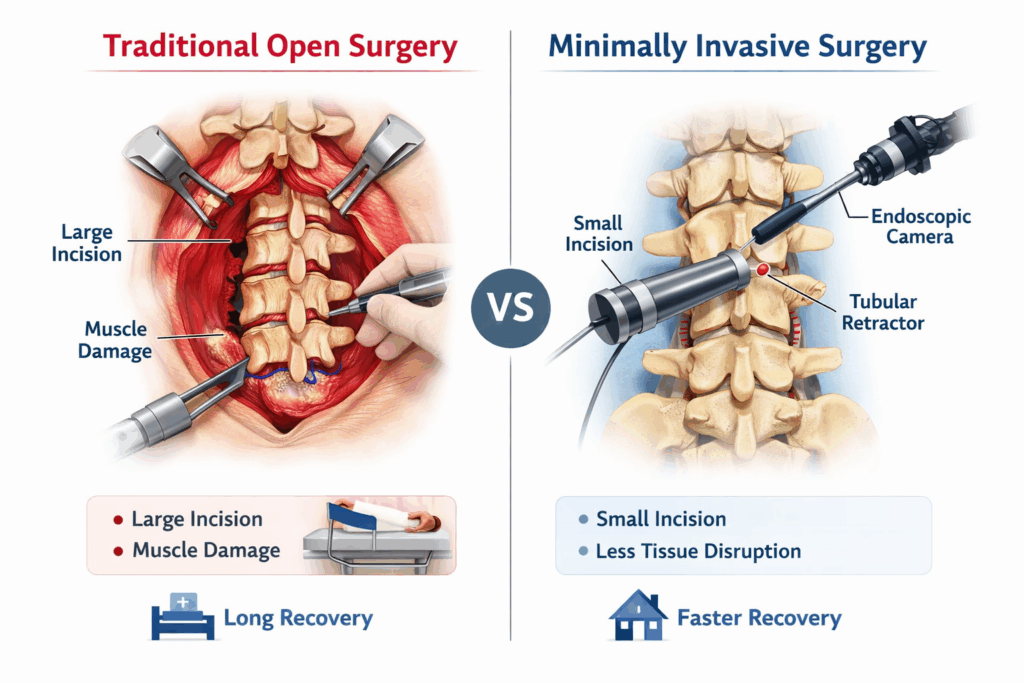
Minimally invasive spine surgery refers to a group of surgical techniques designed to treat spinal conditions through small, targeted incisions rather than large open cuts. Surgeons access the spine using specialized tools such as tubular retractors, microscopes, or endoscopic cameras, allowing them to work with precision while preserving surrounding muscles, ligaments, and soft tissue.
Unlike traditional open surgery—where muscles are pulled away from the spine—minimally invasive techniques gently separate muscle fibers or work through natural anatomical pathways. This significantly reduces tissue damage and post-operative pain.
Common Conditions Treated
Minimally invasive spine surgery may be used to treat:
- Herniated or bulging discs
- Spinal stenosis
- Degenerative disc disease
- Sciatica and nerve compression
- Spinal instability
- Certain spinal fractures
Not every patient is a candidate, but for many, these techniques offer a safer and more efficient path to recovery.
How Minimally Invasive Techniques Improve Recovery
One of the most compelling advantages of minimally invasive spine surgery is how it supports quicker, smoother healing. Because the procedure is designed to reduce physical trauma, the body can focus on recovery rather than repairing extensive surgical damage.
Key differences include:
- Smaller incisions (often less than an inch)
- Reduced blood loss during surgery
- Minimal disruption to muscles and connective tissue
- Lower risk of infection and complications
These factors combine to shorten hospital stays and help patients regain mobility sooner.
Key Benefits of Minimally Invasive Spine Surgery
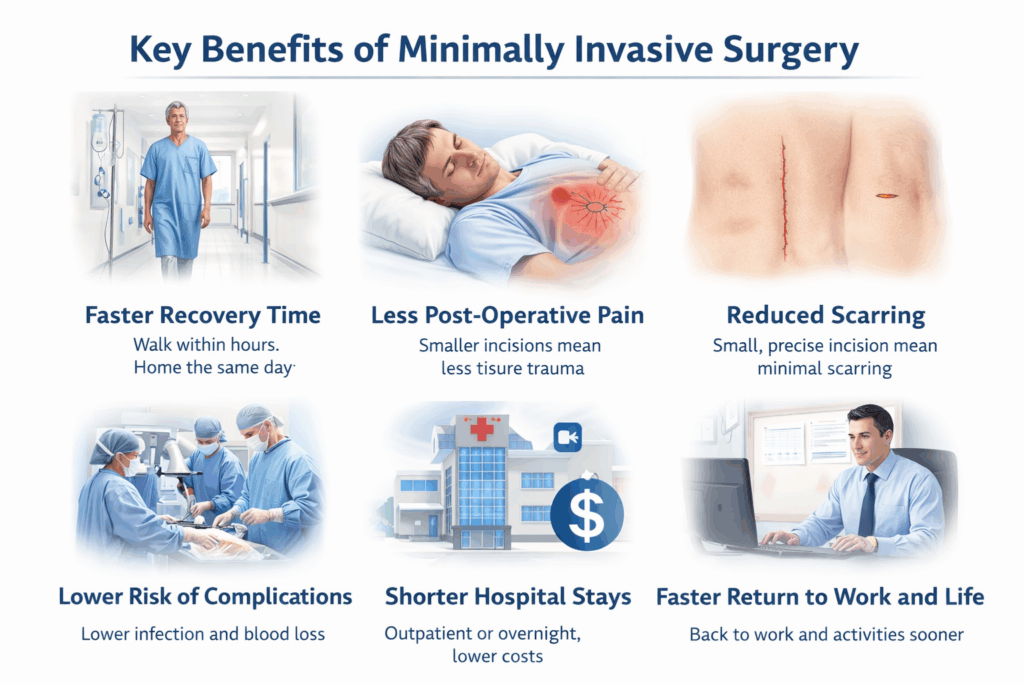
1. Faster Recovery Time
Traditional spine surgery can require weeks—or even months—of limited movement and rehabilitation. With minimally invasive spine surgery, many patients are able to:
- Walk within hours of surgery
- Return home the same day or after a short hospital stay
- Resume light activities within days
By preserving muscle integrity, the body heals more efficiently, accelerating the return to daily routines.
2. Less Post-Operative Pain
Smaller incisions and reduced muscle trauma translate directly into less pain after surgery. Patients often require fewer pain medications and experience:
- Less soreness at the surgical site
- Reduced inflammation
- Greater comfort during recovery
This can also lower reliance on opioids and support a safer healing process.
3. Reduced Scarring
Because incisions are small and precise, scarring is minimal. For many patients, this is not just a cosmetic benefit—it also reflects the reduced internal trauma caused by the procedure.
4. Lower Risk of Complications
Minimally invasive spine surgery is associated with:
- Lower infection rates
- Reduced blood loss
- Decreased risk of muscle damage
- Shorter anesthesia times
These factors are especially important for older patients or those with underlying health conditions.
5. Shorter Hospital Stays
Many minimally invasive spine procedures are performed on an outpatient basis or require only an overnight stay. This reduces:
- Hospital-related stress
- Exposure to hospital-acquired infections
- Overall treatment costs
Patients often prefer recovering at home, surrounded by familiar comforts.
6. Faster Return to Work and Daily Life
For working professionals, caregivers, and active individuals, time away from responsibilities can be challenging. Minimally invasive spine surgery allows many patients to:
- Return to desk work within days or weeks
- Resume physical therapy earlier
- Gradually reintroduce exercise and movement with confidence
This quicker return to productivity can have a significant positive impact on quality of life.
Advanced Technology Makes the Difference
The success of minimally invasive spine surgery depends heavily on surgical expertise and advanced technology. High-resolution imaging, real-time navigation systems, and precision instruments allow surgeons to operate with exceptional accuracy—often through openings no wider than a fingertip.
These tools enable:
- Clear visualization of nerves and spinal structures
- Accurate placement of implants or hardware
- Reduced risk of damage to healthy tissue
Choosing a clinic that invests in modern surgical technology is critical to achieving optimal outcomes.
Is Minimally Invasive Spine Surgery Right for You?
While minimally invasive techniques offer many advantages, they are not suitable for every spinal condition. A thorough evaluation is essential and typically includes:
- Detailed imaging (MRI, CT scans, X-rays)
- Review of symptoms and medical history
- Consideration of non-surgical treatment outcomes
An experienced spine specialist can determine whether minimally invasive spine surgery is appropriate—or if alternative approaches would be more effective.
Why Expertise Matters
Minimally invasive spine surgery requires specialized training and experience. Precision, judgment, and surgical planning play a major role in patient outcomes. Selecting a clinic with a proven track record in advanced spine care is just as important as choosing the procedure itself.
Trust Morrison Clinic for Advanced Minimally Invasive Care
When it comes to spine health, experience and precision matter. Morrison Clinic is dedicated to providing advanced, patient-focused solutions using state-of-the-art minimally invasive spine surgery techniques.
At Morrison Clinic, care is built around:
- Individualized treatment planning
- Cutting-edge surgical technology
- A commitment to faster, safer recovery
- Direct, attentive physician involvement throughout the process
If you’re exploring options for spine surgery and want a solution designed for quicker recovery and lasting relief, minimally invasive spine surgery may be the answer. Trust Morrison Clinic to guide you with expertise, precision, and care—every step of the way.
