

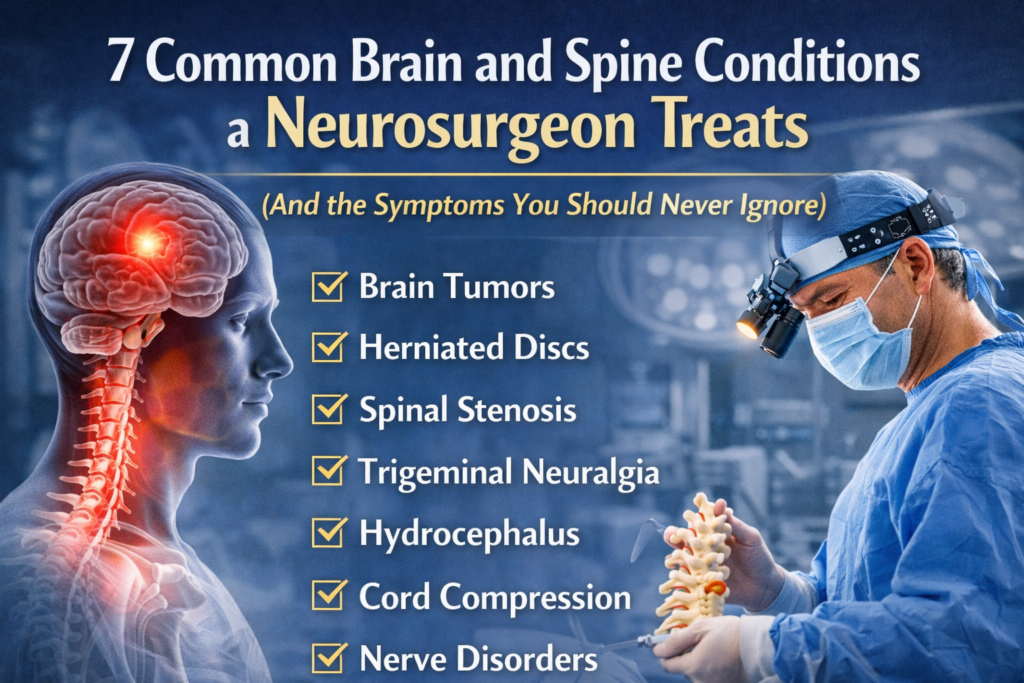
The brain and spinal cord form the control center of the human body. Every movement, thought, sensation, and reflex is regulated by the nervous system. When something interferes with this system, the effects can range from mild discomfort to serious neurological complications.
Neurosurgeons are medical specialists who diagnose and treat conditions affecting the brain, spine, spinal cord, and nerves. Many people believe neurosurgeons only perform complex brain surgery, but in reality, they treat a wide range of conditions that affect everyday health.
From chronic back pain and nerve compression to brain tumors and spinal cord disorders, neurosurgeons help patients regain function, relieve pain, and protect their neurological health.
Understanding the most common neurosurgical conditions can help patients recognize symptoms early and seek timely medical care.
In this guide, we will explore:
• The most common neurological conditions treated by neurosurgeons
• Symptoms that may indicate a neurological disorder
• When to seek specialized neurosurgical care
• How these conditions are diagnosed
• Treatment options available for brain and spine disorders
What Is a Neurosurgical Condition?
A neurosurgical condition is any disorder that affects the brain, spine, spinal cord, or peripheral nerves and may require evaluation by a neurosurgeon.
Some conditions require surgical treatment, while others can be managed with medications, therapy, or minimally invasive procedures.
These conditions often affect the nervous system by:
• compressing nerves
• damaging brain tissue
• affecting spinal stability
• disrupting nerve signals
Because the nervous system controls many essential functions, neurological symptoms should never be ignored.
Why Early Diagnosis Matters for Neurological Disorders
The nervous system does not always give obvious warning signs when problems begin. Symptoms may develop slowly and worsen over time.
Early diagnosis offers several benefits:
• preventing permanent nerve damage
• reducing the need for complex surgery
• improving recovery outcomes
• preserving mobility and independence
Many neurological disorders are easier to treat when detected early.
The Most Common Neurosurgical Conditions
Neurosurgeons treat a wide range of disorders affecting the nervous system. Below are some of the most common conditions they diagnose and manage.
| Condition | Area Affected | Common Symptoms |
|---|---|---|
| Brain Tumor | Brain | Headaches, seizures, vision changes |
| Herniated Disc | Spine | Back pain, nerve pain |
| Spinal Stenosis | Spine | Leg weakness, numbness |
| Trigeminal Neuralgia | Facial nerves | Severe facial pain |
| Hydrocephalus | Brain | Headaches, balance issues |
| Spinal Cord Compression | Spine | Weakness, numbness |
| Peripheral Nerve Disorders | Nerves | Tingling, pain |
Understanding these conditions can help patients recognize when it may be time to consult a neurosurgeon.
1. Brain Tumors
A brain tumor is an abnormal growth of cells in the brain. Tumors may be benign (non-cancerous) or malignant (cancerous).
Brain tumors can affect brain function by pressing on surrounding tissues.
Common Symptoms of Brain Tumors
Symptoms depend on the location and size of the tumor.
Common warning signs include:
• persistent headaches
• seizures
• vision problems
• nausea or vomiting
• difficulty speaking
• memory problems
• personality changes
Not all headaches indicate a brain tumor, but persistent neurological symptoms should be evaluated by a specialist.
Treatment Options
Treatment depends on the type and size of the tumor.
Possible treatments include:
• surgical removal
• radiation therapy
• chemotherapy
• monitoring small tumors with imaging scans
Neurosurgeons play a key role in diagnosing and surgically treating brain tumors.
2. Herniated Disc
A herniated disc occurs when the soft center of a spinal disc pushes through its outer layer and presses on nearby nerves.
This condition is one of the most common causes of nerve pain and back problems.
Symptoms of a Herniated Disc
Symptoms vary depending on which nerve is affected.
Common symptoms include:
• sharp back pain
• pain radiating into the leg or arm
• numbness or tingling
• muscle weakness
• difficulty moving or bending
Herniated discs most often occur in the lower back (lumbar spine) or neck (cervical spine).
Treatment Options
Most cases can be treated without surgery.
Treatment options include:
• physical therapy
• anti-inflammatory medications
• steroid injections
• minimally invasive spine procedures
Surgery may be recommended if symptoms do not improve.
3. Spinal Stenosis
Spinal stenosis occurs when the spinal canal becomes narrowed and compresses the spinal cord or nerves.
This condition is more common in older adults due to age-related changes in the spine.
Symptoms of Spinal Stenosis
Symptoms often develop gradually and worsen over time.
Common symptoms include:
• lower back pain
• numbness in legs
• weakness in legs
• difficulty walking long distances
• pain that improves when bending forward
Treatment Options
Treatment may include:
• physical therapy
• anti-inflammatory medications
• epidural injections
• surgical decompression
Surgery may be necessary in severe cases to relieve nerve pressure.
4. Trigeminal Neuralgia
Trigeminal neuralgia is a chronic nerve disorder that causes severe facial pain.
It affects the trigeminal nerve, which carries sensation from the face to the brain.
Symptoms of Trigeminal Neuralgia
The pain is often described as electric shock-like and may occur suddenly.
Symptoms include:
• sudden facial pain attacks
• pain triggered by chewing or speaking
• sharp stabbing pain in the jaw or cheek
• episodes lasting seconds to minutes
This condition can significantly affect quality of life.
Treatment Options
Treatments may include:
• medications that stabilize nerve signals
• nerve block injections
• minimally invasive procedures
• microvascular decompression surgery
Neurosurgeons specialize in advanced treatments for trigeminal neuralgia.
5. Hydrocephalus
Hydrocephalus occurs when excess cerebrospinal fluid accumulates in the brain.
This buildup increases pressure inside the skull and can affect brain function.
Symptoms of Hydrocephalus
Symptoms vary depending on age and severity.
Common symptoms include:
• headaches
• nausea
• balance problems
• memory difficulties
• blurred vision
• difficulty walking
Treatment Options
Hydrocephalus is often treated using a shunt system, which drains excess fluid from the brain.
Early diagnosis is important to prevent complications.
6. Spinal Cord Compression
Spinal cord compression occurs when pressure is placed on the spinal cord.
This can result from:
• tumors
• herniated discs
• spinal injuries
• spinal stenosis
Symptoms of Spinal Cord Compression
Symptoms may include:
• severe back pain
• weakness in arms or legs
• numbness
• difficulty walking
• loss of bladder or bowel control
Spinal cord compression can be a medical emergency and may require urgent surgical treatment.
7. Peripheral Nerve Disorders
Peripheral nerves connect the brain and spinal cord to the rest of the body.
When these nerves become damaged or compressed, symptoms can occur.
Common nerve disorders include:
• carpal tunnel syndrome
• ulnar nerve compression
• peripheral neuropathy
Symptoms of Nerve Disorders
Common symptoms include:
• tingling in hands or feet
• burning pain
• numbness
• muscle weakness
Treatment may involve therapy, medications, or surgical nerve decompression.
How Neurosurgeons Diagnose Neurological Conditions
Accurate diagnosis is essential before recommending treatment.
Neurosurgeons may use several diagnostic tools.
Imaging Tests
Imaging studies help visualize brain and spine structures.
Common imaging tests include:
• MRI scans
• CT scans
• spinal X-rays
Neurological Examination
A neurological exam evaluates nerve function.
Doctors test:
• reflexes
• muscle strength
• coordination
• sensation
These tests help identify the affected area of the nervous system.
Electrophysiological Tests
These tests measure nerve activity.
Examples include:
• nerve conduction studies
• electromyography (EMG)
These tests help detect nerve damage.
When Should You See a Neurosurgeon?
You should seek medical evaluation if you experience persistent neurological symptoms.
Symptoms that require attention include:
• chronic headaches
• severe back pain
• numbness in arms or legs
• muscle weakness
• balance problems
• seizures
• unexplained nerve pain
Early evaluation can help identify the cause and prevent complications.
Protecting Your Brain and Spine Health
Maintaining neurological health requires healthy lifestyle habits.
Helpful steps include:
• maintaining good posture
• staying physically active
• protecting your head and spine during sports
• maintaining a healthy weight
• seeking early treatment for persistent symptoms
These habits can reduce the risk of neurological disorders.
Frequently Asked Questions
Do neurosurgeons only treat brain tumors?
No. Neurosurgeons treat many conditions involving the brain, spine, and nerves.
Can neurological conditions be treated without surgery?
Yes. Many conditions respond well to medications, physical therapy, and minimally invasive treatments.
What is the difference between a neurologist and a neurosurgeon?
Neurologists diagnose neurological disorders and manage them with medications, while neurosurgeons specialize in surgical treatment when needed.
Are neurological symptoms always serious?
Not always, but persistent symptoms should always be evaluated by a medical professional.
Final Thoughts
Neurological conditions can affect every aspect of life, from movement and sensation to memory and coordination. While these disorders can be frightening, many are treatable when diagnosed early.
Neurosurgeons play a vital role in identifying the underlying cause of neurological symptoms and providing effective treatment options.
If you are experiencing persistent headaches, nerve pain, back pain, or neurological symptoms, consulting a specialist can help protect your brain and spine health.
Early evaluation can lead to better outcomes, improved quality of life, and peace of mind.
