

A diagnosis of a bulging disc can be alarming. Many people immediately assume they need surgery or that they’ll have to live with chronic back pain forever. Fortunately, that isn’t always the case.
One of the most common questions patients search online is:
“Can a bulging disc heal on its own?”
The short answer is yes—in many cases, symptoms from a bulging disc can improve over time with appropriate treatment and lifestyle changes. However, not every bulging disc heals the same way, and not every patient experiences the same recovery.
The key is understanding what’s actually happening inside your spine and knowing when your symptoms require further evaluation.
At Morrison Clinic, we help patients understand the true cause of their back or neck pain before recommending treatment. While some patients recover with conservative care, others may benefit from minimally invasive procedures or, in certain cases, surgery. Every treatment plan begins with a thorough evaluation and is tailored to the individual’s condition.
What Is a Bulging Disc?
Your spine is made up of bones called vertebrae, which are separated by soft, cushion-like discs. These discs act as shock absorbers, allowing your spine to move while protecting the vertebrae from everyday stress.
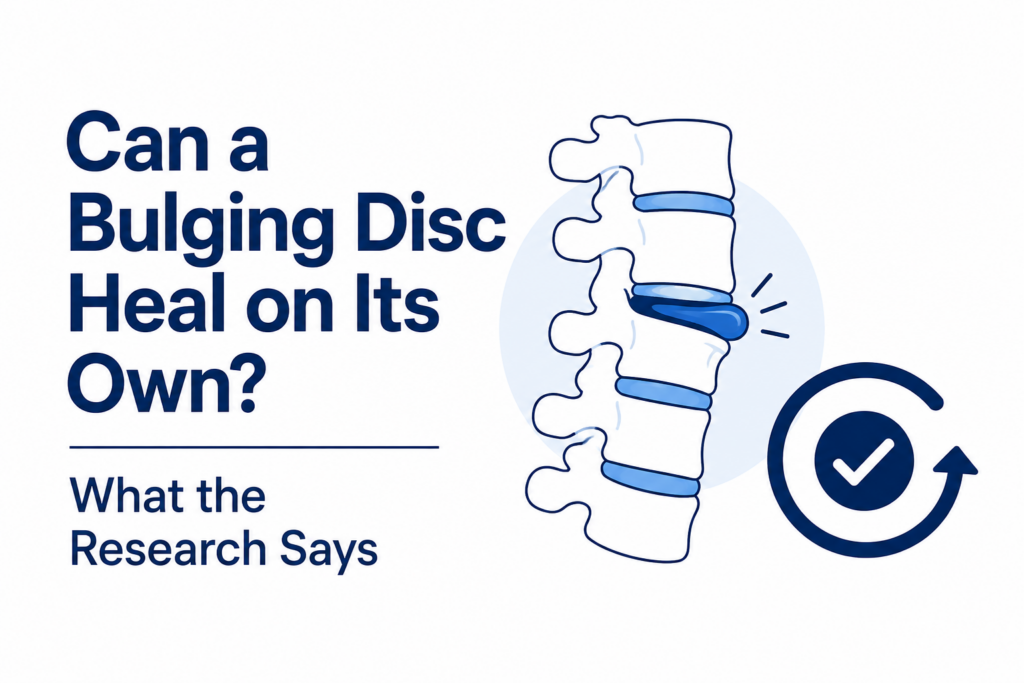
A bulging disc occurs when the outer layer of the disc begins to weaken, causing the disc to extend beyond its normal boundaries. Unlike a herniated disc, the outer layer remains intact, but the disc protrudes outward.
Bulging discs are extremely common, especially as we age. In fact, many people have bulging discs without experiencing any pain or symptoms at all.
The important question isn’t simply whether you have a bulging disc—it’s whether that disc is actually causing your symptoms.
What Causes a Bulging Disc?
Several factors can contribute to disc degeneration and bulging, including:
Natural Aging
As we get older, spinal discs gradually lose water content, making them less flexible and more susceptible to wear.
Repetitive Stress
Jobs or activities involving heavy lifting, bending, twisting, or prolonged sitting can place additional stress on the spine.
Poor Posture
Years of poor posture can increase pressure on certain spinal discs, contributing to degeneration over time.
Injury
Falls, sports injuries, or car accidents may accelerate disc damage.
Genetics
Some individuals are simply more prone to developing degenerative disc disease due to inherited factors.
Can a Bulging Disc Heal Naturally?
This is where the answer becomes more nuanced.
A bulging disc doesn’t always “heal” by returning to its original shape. However, the inflammation surrounding the disc may decrease, pressure on nearby nerves can improve, and symptoms often become significantly better over time.
Many patients experience substantial improvement within several weeks or months through conservative treatment.
This is one reason why immediate surgery is not recommended for every patient diagnosed with a bulging disc.
How Long Does Recovery Take?
Recovery varies depending on:
- The severity of the disc bulge
- Whether nerves are compressed
- Your overall health
- Activity level
- Treatment approach
- Presence of other spinal conditions
Some patients notice improvement within a few weeks, while others require several months of rehabilitation.
The goal is not simply reducing pain but improving spinal function and preventing future episodes.
Signs Your Bulging Disc May Be Improving
Several positive signs may indicate your condition is healing:
Pain Is Becoming Less Frequent
If your episodes of pain are becoming shorter or less intense, your body may be recovering.
Improved Mobility
Many patients gradually regain flexibility and find it easier to bend, stand, or walk.
Less Numbness or Tingling
If nerve irritation decreases, symptoms such as tingling or numbness may begin to improve.
Better Sleep
Reduced nighttime pain often suggests inflammation is decreasing.
Returning to Normal Activities
Being able to sit longer, walk farther, or resume daily activities without significant discomfort is another encouraging sign.
Signs You Should See a Spine Specialist
While many bulging discs improve without surgery, certain symptoms should never be ignored.
Seek prompt medical evaluation if you experience:
- Progressive leg weakness
- Loss of balance
- Severe numbness
- Pain that continues to worsen despite treatment
- Loss of bowel or bladder control
- Persistent pain lasting several months
These symptoms may indicate more significant nerve compression requiring further evaluation.
Conservative Treatment Options
Most patients begin with non-surgical treatment.
Physical Therapy
A structured rehabilitation program can strengthen the muscles supporting your spine while improving flexibility and posture.
Activity Modification
Remaining active is generally encouraged, but certain movements may need to be temporarily limited.
Anti-Inflammatory Medication
Your physician may recommend medications to help reduce inflammation and improve comfort.
Heat and Ice
Alternating heat and ice may help relieve muscle tension and inflammation.
Lifestyle Changes
Simple changes can significantly reduce stress on your spine, including:
- Maintaining a healthy weight
- Improving posture
- Regular low-impact exercise
- Ergonomic workstations
- Proper lifting techniques
When Conservative Treatment Isn’t Enough
If symptoms persist despite several weeks or months of conservative care, additional treatment options may be considered.
Depending on your diagnosis, these may include:
- Image-guided spinal injections
- Minimally invasive procedures
- Surgical consultation when appropriate
The right treatment depends on the cause of your symptoms rather than the MRI findings alone.
Bulging Disc vs. Herniated Disc
Although these terms are often used interchangeably, they describe different conditions.
Bulging Disc
- Outer disc remains intact
- Disc extends beyond its normal boundary
- Often related to degeneration
- May or may not cause symptoms
Herniated Disc
- Outer disc layer tears
- Inner material pushes outward
- More likely to irritate nearby nerves
- Often associated with sciatica or nerve pain
Understanding the difference helps determine the most appropriate treatment approach.
Can Exercise Help?
For many patients, yes.
The right exercises can strengthen the muscles supporting the spine and improve long-term function.
However, not every exercise is appropriate for every patient.
Activities that are commonly recommended include:
- Walking
- Swimming
- Gentle stretching
- Core strengthening
- Low-impact aerobic exercise
High-impact activities may need to be avoided until symptoms improve.
Always discuss exercise recommendations with your healthcare provider before beginning a new program.
Preventing Future Disc Problems
Although aging cannot be stopped, there are several ways to help protect your spine.
Stay Active
Regular movement keeps supporting muscles strong.
Improve Core Strength
A strong core helps stabilize the spine and reduce stress on spinal discs.
Practice Good Posture
Proper posture while sitting, standing, and lifting can reduce unnecessary strain.
Maintain a Healthy Weight
Excess weight places additional pressure on the spine.
Avoid Smoking
Smoking has been associated with accelerated disc degeneration and slower healing.
When Surgery May Be Recommended
While many bulging discs improve without surgery, some patients develop significant neurological symptoms or persistent pain that does not respond to conservative care.
Surgery may be considered when:
- Pain severely limits daily activities.
- Conservative treatment has failed.
- Progressive neurological symptoms develop.
- Imaging findings correlate with ongoing nerve compression.
Every surgical recommendation should be based on a careful evaluation of your symptoms, physical examination, and imaging—not simply the presence of a bulging disc.
Frequently Asked Questions
Can a bulging disc disappear completely?
Some bulging discs become less symptomatic over time, but imaging findings do not always completely return to normal.
Is walking good for a bulging disc?
Walking is often recommended because it promotes circulation, maintains mobility, and places relatively low stress on the spine.
Should I stay in bed?
Extended bed rest is generally discouraged. Remaining active within your comfort level often supports recovery more effectively than prolonged inactivity.
Does everyone with a bulging disc need surgery?
No. In fact, many patients recover with conservative treatment and never require surgery.
Final Thoughts
A bulging disc diagnosis does not automatically mean you’ll need surgery. Many patients experience significant improvement through conservative treatment, healthy lifestyle changes, and time.
The most important step is obtaining an accurate diagnosis to determine whether your bulging disc is actually responsible for your symptoms. Because imaging findings don’t always match a patient’s pain, treatment decisions should always be based on a comprehensive evaluation rather than an MRI alone.
At Morrison Clinic, we take an individualized approach to spine care. Whether your symptoms can be managed with conservative treatment, minimally invasive procedures, or surgery when appropriate, our goal is to help you find the safest and most effective path back to an active, pain-free life.
If persistent back pain is affecting your quality of life, schedule a consultation with Morrison Clinic. A comprehensive evaluation can help identify the source of your symptoms and determine the treatment approach that’s right for you.
